shepherd: useModalOverlay does not play well with multiple instances on the page
Reduced Test Case Fiddle
https://jsfiddle.net/h8gwus79/
Version: whatever version https://shipshapecode.github.io is using right now
// never started
const unused = new Shepherd.Tour({
  defaultStepOptions: {
    classes: 'shadow-md bg-purple-dark',
    scrollTo: true
  },
  useModalOverlay: true
});

// we start this one
const tour = new Shepherd.Tour({
  defaultStepOptions: {
    classes: 'shadow-md bg-purple-dark',
    scrollTo: true
  },
  useModalOverlay: true
});

tour.addStep('example', {
  title: 'Example Shepherd',
  text: 'Creating a Shepherd is easy too! Just create ...',
  attachTo: '#someImg',
  advanceOn: '.docs-link click'
});

tour.start();
<img src="https://img.kizuna.austinpray.com/images/879bf634e1ea4e63928dc36c4ac3add1.jpg" id="someImg" />
Current Behavior
Active step is not highlighted
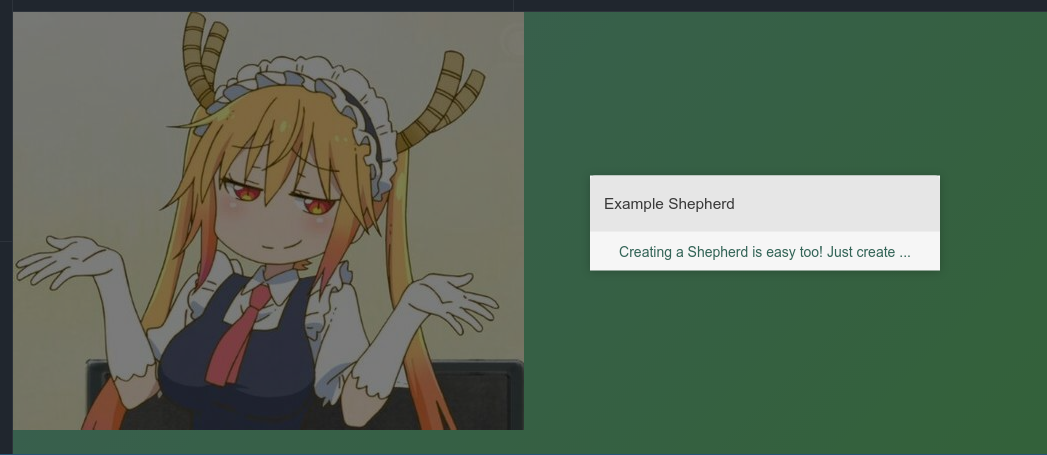
note the duplicate shepherdModalOverlayContainers

Expected Behavior
Active step is highlighted

Comments
- I would expect shepherd to not touch the dom at all until tour.start()
- The insertion of the svg overlay should be idempotent
About this issue
- Original URL
- State: closed
- Created 5 years ago
- Reactions: 1
- Comments: 22 (12 by maintainers)
It doesn’t really matter if there is a usecase or not: the API you created implies creating multiple instances of a Shepherd.Tour is possible using the “new” keyword.
If this is not what you intended you need to change the API to use a singleton (don’t do this)
or throw an error if two instances of Shepherd.Tour are instantiated (don’t do this lol)
By following the current API with a correct understanding of the javascript language you get undefined behavior.
Here is a use case anyway:
Imagine a freshly signed up SaaS user is logging into a single page app backoffice for the first time
Having to maintain my own singleton that sets up and tears down a single instance of Shepherd every time I want to show a tour like @michalsnik is doing is definitely not ideal, as he has expressed as well.
So all that leads to:
@rwwagner90 what do you think about these two comments?