realm-js: Relationship created in atlas/realm ui causes null field in realm js
Goals
Relationship via atlas, to process in realm js.
Expected Results
opUnit field populated with results from collection in opunit table for that particular id key.
Actual Results
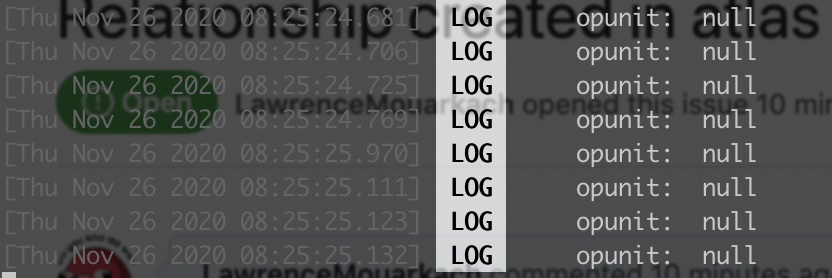
opUnit field is null
Steps to Reproduce
Schema 1:
{ “title”: “Parcel”, “properties”: { “_id”: { “bsonType”: “objectId” }, “_partitionKey”: { “bsonType”: “string” }, “opUnit”: { “bsonType”: “string” }, “tourName”: { “bsonType”: “string” } }, “required”: [ “tourName” ] }
### Schema 2: { “properties”: { “_id”: { “bsonType”: “string” }, “tourName”: { “bsonType”: “string” }, “createdAt”: { “bsonType”: “date” } }, “required”: [ “_id”, “tourName”, “createdAt” ], “title”: “OpUnit” }
Relationship in atlas on Parcel Schema:
{ “opUnit”: { “ref”: “#/relationship/mongodb-atlas/tours_db/opunit”, “foreign_key”: “_id”, “is_list”: false } }
- create relationship in atlas
- open Parcel realm
Code Sample
  Realm.open(config).then(projectRealm => {
    const syncParcels = projectRealm.objects('Parcel');
    syncParcels.forEach(element => console.log(element.opUnit));
  });
Output
Version of Realm and Tooling
- Realm JS SDK Version: ?
- Node or React Native: ?
- Client OS & Version: ?
- Which debugger for React Native: ?/None
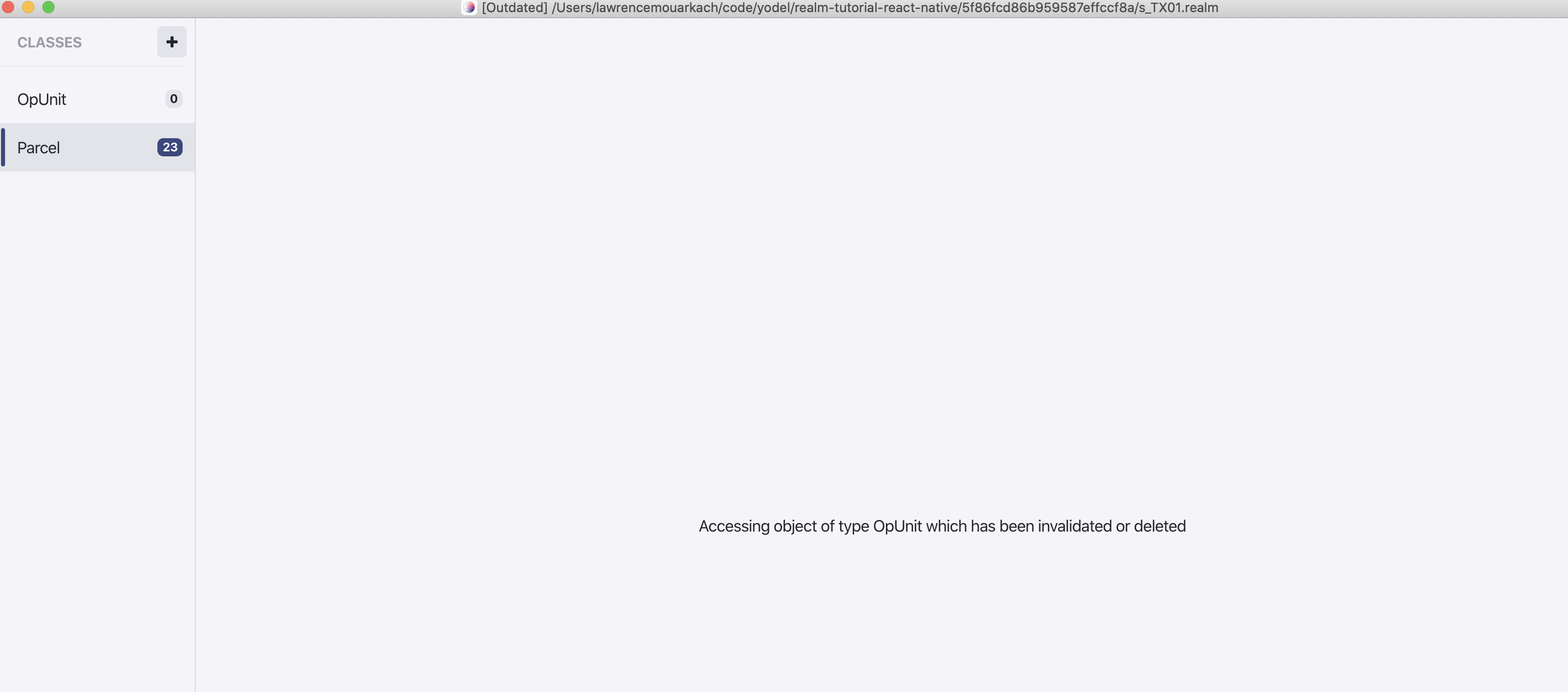
Opening in realm studio:
About this issue
- Original URL
- State: closed
- Created 4 years ago
- Comments: 19 (7 by maintainers)
Perhaps that needs to be clarified in the docs. In the Partitioning page, there’s the following section:
What this means is that a Realm with partition ‘xyz’ will only contain documents that have partitionKey (tourName in your case) equal to
xyz. The idea of the relationships configuration is to map properties to objects, thus saving you the need to manually lookup items. For example, if you have the following model:To lookup the company where a dog’s owner works, you’d need:
This is obviously going to get more and more annoying, the more nested your graph gets. It’s also less performant. With relationships, this maps to strongly typed object links in Realm, so the same code looks like:
It’s also immensely beneficial for GraphQL, where you can issue one query and receive all the results in one response, rather than make hundreds of requests.
Ultimately, relationships and partitioning are unrelated to one another - they solve different problems and don’t affect how the other behaves.
Thanks for reporting this, we are going to take a look into it. 👍