pytorch-lightning: In multinode training with ddp each node duplicates logs and has node_rank=0
🐛 Bug
When training using ddp in a multi-node environment with seed_everything(workers=True) there are identical loss values logged on each node. For example this occurs in a 3 node environment with limit_val_batches=2 (logged via mlflow):
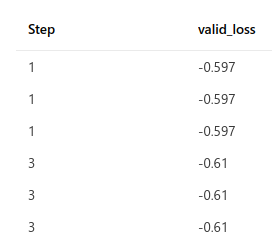
The NODE_RANK of each node is 0 (which shouldn’t be the case) and identical loss values also appear in each node’s process when printed to the screen so it appears each node is using the same data in the same order. One fix I attempted was to set NODE_RANK to OMPI_COMM_WORLD_RANK, but this resulted in the job hanging or crashing.
To Reproduce
Download the two python scripts below (edit as needed to run on a multinode multi-gpu Azure cluster) and then run python submit_job.py. AzureML is used to submit the job with an MPIConfiguration.
submit_job.py:
import os
from azureml.core.runconfig import PyTorchConfiguration, MpiConfiguration
from azureml.core import Environment, Workspace, ScriptRunConfig, Experiment
from azureml.core.authentication import ServicePrincipalAuthentication

experiment_name = "XXXXXXXXX"
environment_name = "XXXXXXXX"
cluster_name="XXXXXXX"
node_count=3
environment_version="XXXXXXX"

command="; ".join([
    "python -m pip freeze",
    "wget https://raw.githubusercontent.com/Lightning-AI/lightning/master/requirements/collect_env_details.py",
    "python collect_env_details.py",
    "python logging_reprex.py"
])

print(command)

ws = Workspace.get(
    name="XXXXXXXXX",
    resource_group="XXXXXXXXXX",
    subscription_id=os.environ["AZURE_SUBSCRIPTION_ID"],
    auth= ServicePrincipalAuthentication(
            tenant_id=os.environ.get("AZURE_TENANT_ID"),
            service_principal_id=os.environ.get("AZURE_CLIENT_ID"),
            service_principal_password=os.environ.get("AZURE_CLIENT_SECRET")
        )
    )

compute_target=ws.compute_targets[cluster_name]

env = Environment.get(
    workspace = ws,
    name = environment_name,
    version = environment_version
    )

print(env)
print(env.get_image_details(ws))

job_config = MpiConfiguration(node_count=node_count, process_count_per_node=1)

src = ScriptRunConfig(
    source_directory = ".",
    command=command,
    compute_target = compute_target,
    environment = env,
    distributed_job_config = job_config
)

# Submit job
run = Experiment(ws, experiment_name).submit(src)
logging_reprex.py:
import numpy as np # fix for https://github.com/pytorch/pytorch/issues/37377
import torch, os, logging, sys
from torch.utils.data import DataLoader, Dataset
#from deepspeed.ops.adam import FusedAdam
from azureml.core import Run, Workspace
from pytorch_lightning import LightningModule, Trainer, LightningDataModule, seed_everything
from pytorch_lightning.loggers import MLFlowLogger

divider_str="-"*40

def get_env_display_text(var_name):
    var_value = os.environ.get(var_name, "")
    return f"{var_name} = {var_value}"

def display_environment(header='Environmental variables'):
    """
    Print a few environment variables of note
    """
    variable_names = [
        "PL_GLOBAL_SEED",
        "PL_SEED_WORKERS",
        "AZ_BATCH_MASTER_NODE",
        "AZ_BATCHAI_MPI_MASTER_NODE",
        "MASTER_ADDR",
        "MASTER_ADDRESS",
        "MASTER_PORT",
        "RANK",
        "NODE_RANK",
        "LOCAL_RANK",
        "GLOBAL_RANK",
        "WORLD_SIZE",
        "NCCL_SOCKET_IFNAME",
        "OMPI_COMM_WORLD_RANK",
        "OMPI_COMM_WORLD_LOCAL_RANK",
        "OMPI_COMM_WORLD_SIZE",
        "OMPI_COMM_WORLD_LOCAL_SIZE"
    ]
    var_text = "\n".join([get_env_display_text(var) for var in variable_names])
    print(f"\n{header}:\n{divider_str}\n{var_text}\n{divider_str}\n")

def get_run():
    """
    Returns active run azureml object
    """
    run = Run.get_context()
    return run

class RandomDataset(Dataset):
    def __init__(self, size, length):
        self.len = length
        self.data = torch.randn(length, size)

    def __getitem__(self, index):
        return self.data[index]

    def __len__(self):
        return self.len

class BoringModel(LightningModule):
    def __init__(self):
        super().__init__()
        self.save_hyperparameters()
        self.model = torch.nn.Linear(32, 2)

    def forward(self, x):
        return self.model(x)

    def training_step(self, batch, batch_idx):
        loss = self(batch).sum()
        self.log("train_loss", loss, on_step=True, on_epoch=True)
        return {"loss": loss}

    def validation_step(self, batch, batch_idx):
        loss = self(batch).sum()
        self.log("valid_loss", loss)
        print(f"""self.global_step: {self.global_step}
gpu #: {torch.cuda.current_device()}
batch_idx: {batch_idx}
loss: {loss}
""")

    def configure_optimizers(self):
        return torch.optim.AdamW(self.model.parameters())
        #return FusedAdam(self.model.parameters())

    def setup(self, stage=None) -> None:

        # prevents hanging
        if stage != "fit":
            return
        display_environment(f"LightningModule setup(stage={stage})")

class DataModule(LightningDataModule):
    def __init__(self):
        super().__init__()
        self.num_workers = os.cpu_count()
        print(f"num_workers set to {self.num_workers}")

    def setup(self, stage=None) -> None:
        display_environment(f"DataModule setup(stage={stage})")
        self._dataloader = DataLoader(
            RandomDataset(32, 64),
             num_workers=self.num_workers,
             batch_size=1,
             pin_memory=True
             )

    def train_dataloader(self):
        return self._dataloader

    def test_dataloader(self):
        return self._dataloader

    def val_dataloader(self):
        return self._dataloader

if __name__ == "__main__":

    # Toggle comment here to make logged loss values identical (uncommented) or unique (commented)
    seed_everything(102938, workers = True)

    display_environment("__main__")
    model = BoringModel()
    dm = DataModule()

    # If running on azure, get the active tracking uri and run id
    # else, use the workspace to get a uri
    active_run = get_run()
    offline = False
    try:
        print(active_run.experiment)
    except:
        offline = True

    if offline:
        print("Running offline...")
        run_id = None
        ws = Workspace.get(
            subscription_id=os.environ.get("AZURE_SUBSCRIPTION_ID"),
            resource_group="XXXXXXX",
            name="XXXXXXXX",
        )
        tracking_uri = ws.get_mlflow_tracking_uri()
    else:
        tracking_uri =active_run.experiment.workspace.get_mlflow_tracking_uri()
        run_id = active_run.id

    logger = MLFlowLogger(
                experiment_name='reprex',
                tracking_uri=tracking_uri,
                run_id=run_id
    )

    trainer = Trainer(
        accelerator='gpu',
        auto_select_gpus=True,
        limit_train_batches=2,
        limit_val_batches=2,
        log_every_n_steps=1,
        logger=logger,
        enable_checkpointing=False,
        num_sanity_val_steps=0,
        max_epochs=2,
        enable_model_summary=False,
        strategy="ddp",
        precision=16
    )

    trainer.fit(model, datamodule=dm)
Expected behavior
Nodes should load different data from their dataloaders and should not duplicate logged loss values.
Environment
- 3 node Azure compute cluster
- Each node has 2x V100 GPUs and the base docker image for the environment is
mcr.microsoft.com/azureml/openmpi4.1.0-cuda11.3-cudnn8-ubuntu20.04
* CUDA:
	- GPU:
		- Tesla V100-PCIE-16GB
		- Tesla V100-PCIE-16GB
	- available:         True
	- version:           11.3
* Packages:
	- numpy:             1.22.3
	- pyTorch_debug:     False
	- pyTorch_version:   1.11.0
	- pytorch-lightning: 1.6.4
	- tqdm:              4.64.0
* System:
	- OS:                Linux
	- architecture:
		- 64bit
		- ELF
	- processor:         x86_64
	- python:            3.8.13
	- version:           #38-Ubuntu SMP Sun Mar 22 21:27:21 UTC 2020
Environmental variables are printed to the log in the python script at various points in the process. Below are the values of these environmental variables on each node before the LightningModule and LightningDataModule objects are initiated (ie. the display_environment("__main__") call in the script above).
Node 1
__main__:
----------------------------------------
PL_GLOBAL_SEED = 102938
PL_SEED_WORKERS = 1
MASTER_ADDR = 127.0.0.1
MASTER_ADDRESS =
MASTER_PORT = 38581
RANK =
NODE_RANK = 0
LOCAL_RANK = 1
GLOBAL_RANK =
WORLD_SIZE = 2
NCCL_SOCKET_IFNAME = eth0
OMPI_COMM_WORLD_RANK = 0
OMPI_COMM_WORLD_LOCAL_RANK = 0
OMPI_COMM_WORLD_SIZE = 3
OMPI_COMM_WORLD_LOCAL_SIZE = 1
----------------------------------------
Node 2
__main__:
----------------------------------------
PL_GLOBAL_SEED = 102938
PL_SEED_WORKERS = 1
MASTER_ADDR = 127.0.0.1
MASTER_ADDRESS =
MASTER_PORT = 57987
RANK =
NODE_RANK = 0
LOCAL_RANK = 1
GLOBAL_RANK =
WORLD_SIZE = 2
NCCL_SOCKET_IFNAME = eth0
OMPI_COMM_WORLD_RANK = 1
OMPI_COMM_WORLD_LOCAL_RANK = 0
OMPI_COMM_WORLD_SIZE = 3
OMPI_COMM_WORLD_LOCAL_SIZE = 1
----------------------------------------
Node 3
__main__:
----------------------------------------
PL_GLOBAL_SEED = 102938
PL_SEED_WORKERS = 1
MASTER_ADDR = 127.0.0.1
MASTER_ADDRESS =
MASTER_PORT = 46819
RANK =
NODE_RANK = 0
LOCAL_RANK = 1
GLOBAL_RANK =
WORLD_SIZE = 2
NCCL_SOCKET_IFNAME = eth0
OMPI_COMM_WORLD_RANK = 2
OMPI_COMM_WORLD_LOCAL_RANK = 0
OMPI_COMM_WORLD_SIZE = 3
OMPI_COMM_WORLD_LOCAL_SIZE = 1
----------------------------------------
cc @borda @awaelchli @rohitgr7 @akihironitta @justusschock @kaushikb11 @ananthsub @carmocca @edward-io @kamil-kaczmarek @Raalsky @Blaizzy
About this issue
- Original URL
- State: closed
- Created 2 years ago
- Comments: 24 (11 by maintainers)
I did some more experimentation and discovered that while environmental variable configuration is needed for running with an MPIConfiguration that no environmental variable adjustments are needed when using a PytorchConfiguration. Additionally, an error regarding MKL requires an environmental variable adjustment when I used MPI, but I didn’t have this issue with PytorchConfiguration.
I ended up configuring my scripts so that I could run jobs with either MPIConfiguration (with necessary adjustments) or PytorchConfiguration. I haven’t tested this extensively but runtimes seem to be comparable between configurations. These updated scripts and info on my environment are below (run
python submit_job.pyto submit the job on the Azure cluster). Also note that although the script is now configured forstrategy="deepspeed_stage_3"that I also testedstrategy="ddp"(and switched out the FusedAdam optimizer for torch.optim.AdamW).Also, for reference here are the environmental variables for the first and last process on a 2 node, 2 gpu per node run with PytorchConfiguration. Note that
RANKis now set where it was not with the MPIConfiguration.Driver 0
Driver 3
Scripts
submit_job.py
train.py
Environment
mcr.microsoft.com/azureml/openmpi4.1.0-cuda11.3-cudnn8-ubuntu20.04@jessecambon
AZ_BATCH_MASTER_NODEis empty when launching with single node, so I just set a random high number (in the spirit of the inaccurate Azure ML documentation)adding the property decorator to
main_address(and any others you need to access that way) should fix that:@thongonary Just confirming this works for me 🚀
I tested in multinode and single node environments with deepspeed. The only change I made was to wrap
num_nodesandgpus_per_nodewithin the function withint()since the command line arguments come in as strings.Here is an updated function based on @jessecambon’s answer to scale it on both single node and multi node:
This function can be inserted directly in the main training code:
@jmwoloso In your example, my proposal would result in
NODE_RANK = 0forOMPI_COMM_WORLD_RANK = 0, 1NODE_RANK = 1forOMPI_COMM_WORLD_RANK = 2, 3@jessecambon Wouldn’t it be simpler to just set
Just wonder if you have any reason not to do that.
@awaelchli Thanks for the info. I haven’t tried the
ClusterEnvironmentapproach yet, but I was able to get training to run successfully on several different multinode configurations using the environmental variable tweaks below. I’m guessing either approach would achieve the same result or is there a difference with ClusterEnvironment?Also, It appears
NODE_RANKis required because if I run without setting it or if I setNODE_RANK='0'then the process hangs.New logic in
logging_reprex.py:The command for calling the script now looks like this:
The logs in mlflow now look like what I’d expect (ie. no duplicate entries):
For reference here are the environmental variables in the first and last processes in a 2 node, 4 gpu process (ie. 8 total processes). Note that the
RANKvariable is still not being set.Driver 0
Driver 7
For reference RE MPI variables: https://www.open-mpi.org/faq/?category=running#mpi-environmental-variables
I don’t think there is a way to determine a node rank in MPI. Others have asked about this before too.
If node rank is not set, PL assumes it is 0. PL can’t know that you are running multi-node unless something tells it on which node each process runs. But in general, it doesn’t have to know. You can also just make Lightning pretend that it’s one huge machine and let the backend handle the communication. But what PL needs to know at the very minimum is the rank of each process and the world size. This is what MPI exposes through the variables
but Lightning only understands
etc. as variable names.
So you can either translate these directly or implement a custom cluster environment that translates these variables into Lightning language.
Since there are many different implementations of MPI out there, it’s probably hard for us to provide a default implementation. I’m not sure? For now I suggest to go with the cluster environment plugin.
Once implemented correctly, you should see (assuming two processes per node):
Logs from node 0: Initializing distributed: GLOBAL_RANK: 1, MEMBER: 2/6 Initializing distributed: GLOBAL_RANK: 0, MEMBER: 1/6
Logs from node 1: Initializing distributed: GLOBAL_RANK: 3, MEMBER: 4/6 Initializing distributed: GLOBAL_RANK: 2, MEMBER: 3/6
etc.