test-infra: triage: go.k8s.io/triage fails to render in Google Chrome due to excessively large cluster data
What happened:
Loading… parsing 0MB.
console:
VM106:1 Uncaught SyntaxError: Unexpected end of JSON input
    at JSON.parse (<anonymous>)
    at interactive.js:338
(anonymous) @ interactive.js:338
setTimeout (async)
(anonymous) @ interactive.js:337
req.onload @ interactive.js:291
load (async)
get @ interactive.js:290
getData @ interactive.js:326
load @ interactive.js:365
(anonymous) @ index.html?test=Pods should support pod readiness gates:81
What you expected to happen:
results should load
How to reproduce it (as minimally and precisely as possible):
Please provide links to example occurrences, if any:
Anything else we need to know?:
https://kubernetes.slack.com/archives/C09QZ4DQB/p1625957726455500
About this issue
- Original URL
- State: closed
- Created 3 years ago
- Reactions: 1
- Comments: 25 (23 by maintainers)
Update: it’s working in Firefox, not working in Chrome.
Hey so, when I visited go.k8s.io/triage, it counted up as far as 600MB before dropping to 0. That is way, way too high.
I think it’s ingesting some poison data (aka data that doesn’t cluster well and is causing it to slow way down)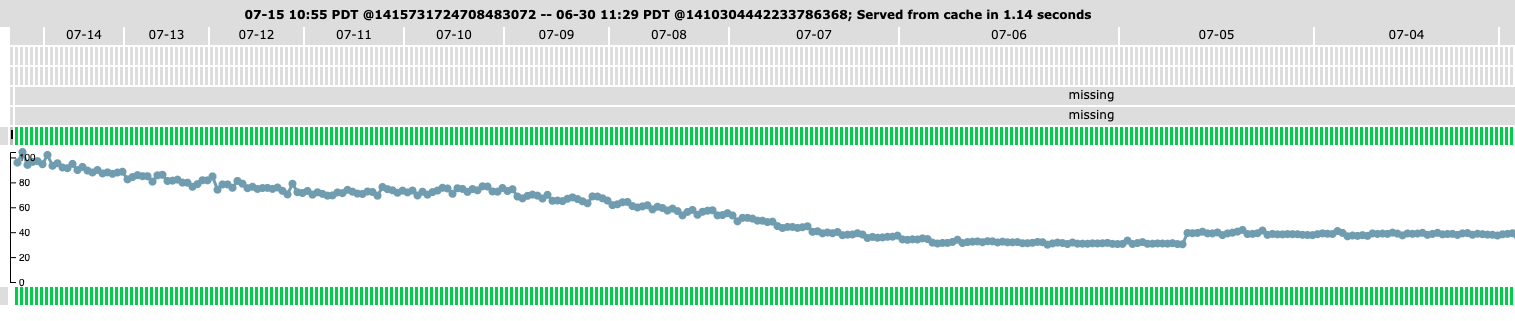
It’s baaaack
Let’s choose a known good/bad
Some choice lines from each log
So while the total volume of failures went up by ~1.5 the number of unique-to-bad failures is… pretty high. Maybe we could find out what those tests are, when they were introduced, etc.
/assign I’ll take a look