democratic-csi: Unable to resize disk image to requested size (Ext4)
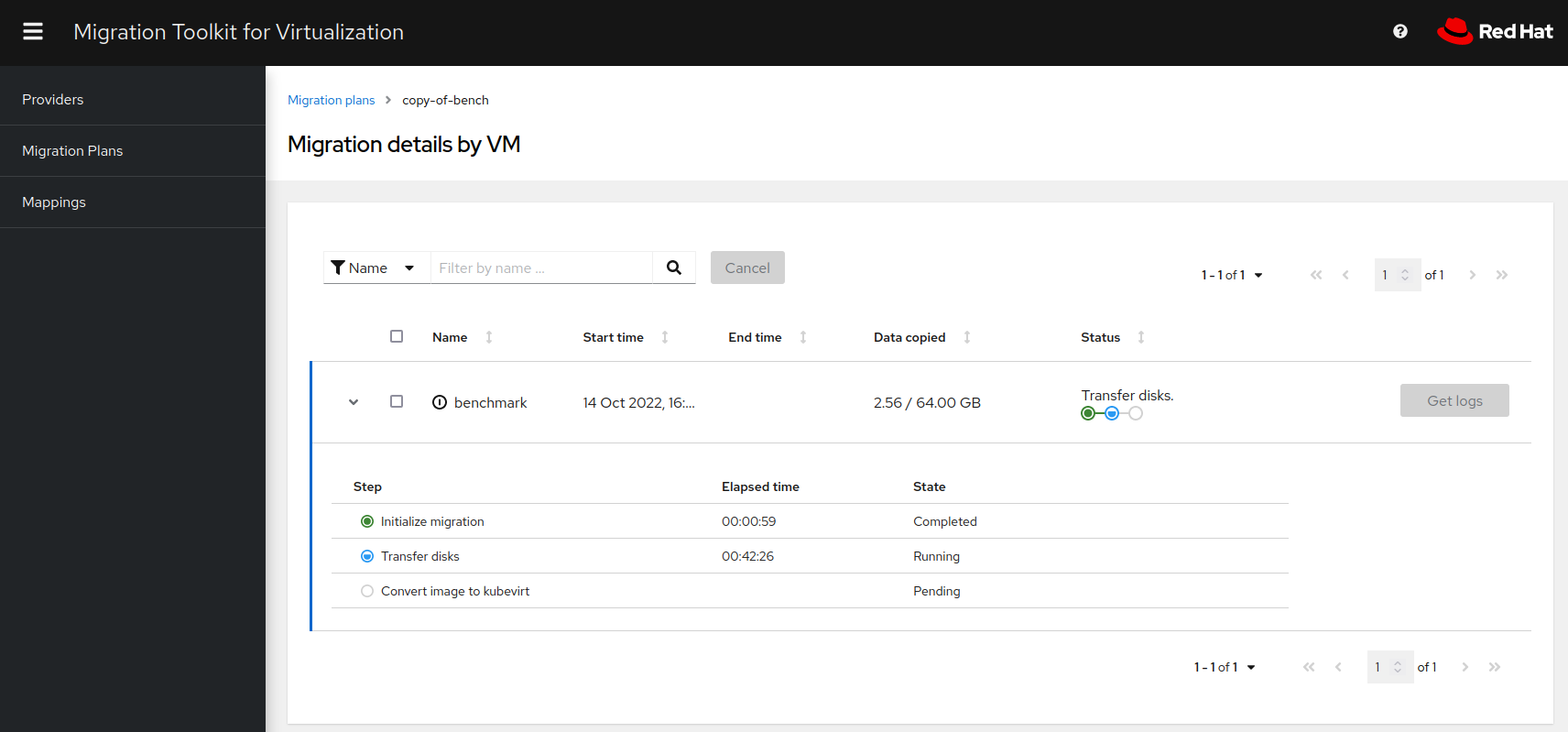
Issue happens on SCALE (TrueNAS-SCALE-22.02.4), but not CORE (TrueNAS-13.0-U2). This is when running a VM migration from ESXi to OpenShift.
Maybe this is related? https://github.com/kubevirt/kubevirt/issues/6586
I haven’t tried the new VDDK version (7.0.3.2) here as I don’t think that is contributing to the issue: https://vdc-repo.vmware.com/vmwb-repository/dcr-public/b677d84a-d0a2-46ab-99bc-590c2f6281b9/d1496e6a-0687-4e13-afdd-339a11e33fab/VDDK-703c-ReleaseNotes.html


SCALE
csiDriver:
  name: "org.democratic-csi.iscsi"

storageClasses:
- name: freenas-api-iscsi-csi
  defaultClass: false
  reclaimPolicy: Delete
  volumeBindingMode: Immediate
  allowVolumeExpansion: true
  parameters:
    fsType: ext4
  mountOptions: []
  secrets:
    provisioner-secret:
    controller-publish-secret:
    node-stage-secret:
    node-publish-secret:
    controller-expand-secret:


driver:
  config:
    driver: freenas-api-iscsi
    instance_id:
    httpConnection:
      protocol: http
      host: 172.16.x.x
      port: 80
      username: root
      password: ********
      allowInsecure: true
    zfs:
      datasetParentName: tank/k8s/iscsi/v
      detachedSnapshotsDatasetParentName: tank/k8s/iscsi/s
      zvolCompression: lz4
      zvolDedup: off
      zvolEnableReservation: true  # Tried false here as well
      zvolBlocksize:
    iscsi:
      targetPortal: "172.16.x.x:3260"
      targetPortals: []
      # leave empty to omit usage of -I with iscsiadm
      interface:
      namePrefix: csi-
      nameSuffix: "-cluster"
      targetGroups:
        - targetGroupPortalGroup: 1
          targetGroupInitiatorGroup: 1
          targetGroupAuthType: None
      extentInsecureTpc: true
      extentXenCompat: false
      extentDisablePhysicalBlocksize: false
      extentBlocksize: 512
      extentRpm: "SSD"
      extentAvailThreshold: 0
CORE
csiDriver:
  name: "org.democratic-csi.iscsi"

storageClasses:
- name: freenas-iscsi-csi
  defaultClass: false
  reclaimPolicy: Delete
  volumeBindingMode: Immediate
  allowVolumeExpansion: true
  parameters:
    fsType: ext4
  mountOptions: []
  secrets:
    provisioner-secret:
    controller-publish-secret:
    node-stage-secret:
    node-publish-secret:
    controller-expand-secret:


driver:
  config:
    driver: freenas-iscsi
    instance_id:
    httpConnection:
      protocol: http
      host: 172.16.x.x
      port: 80
      username: root
      password: **********
      allowInsecure: true
      apiVersion: 2
    sshConnection:
      host: 172.16.1.119
      port: 22
      username: root
      password: ***********
    zfs:
      cli:
        paths:
          zfs: /usr/local/sbin/zfs
          zpool: /usr/local/sbin/zpool
          sudo: /usr/local/bin/sudo
          chroot: /usr/sbin/chroot
      datasetParentName: tank/k8s/iscsi/v
      detachedSnapshotsDatasetParentName: tank/k8s/iscsi/s
      zvolCompression: lz4
      zvolDedup: off
      zvolEnableReservation: false
      zvolBlocksize: 16K
    iscsi:
      targetPortal: "172.16.x.x:3260"
      targetPortals: []
      # leave empty to omit usage of -I with iscsiadm
      interface:
      namePrefix: csi-
      nameSuffix: "-cluster"
      targetGroups:
        - targetGroupPortalGroup: 1
          targetGroupInitiatorGroup: 1
          targetGroupAuthType: None
      extentInsecureTpc: true
      extentXenCompat: false
      extentDisablePhysicalBlocksize: false
      extentBlocksize: 512
      extentRpm: "SSD"
      extentAvailThreshold: 0
About this issue
- Original URL
- State: closed
- Created 2 years ago
- Comments: 43 (16 by maintainers)
I would argue that this should be the default for ext4 in a containerized world, not having that set by default leads to the issue we figured out here.
I think a call is in order. Shout out to my github profile email and we’ll get something arranged.
Can you send the logs from the
csi-drivercontainer on a node pod on a relevant node (where the migration pod/process is running from)? My thinking is this (I think you are on to something with the filesystem calculation theory):democratic-csiis creating the volume as requested (adding padding to the size of the zvol as necessary)There’s a lot of supposition here without a better understanding on my part about how the importer works and what it’s doing. If I had to venture a guess when working in filesystem mode, a vmdk/qcow images is being exported from esxi and then copied to the ext4/xfs/whatever filesystem of the PV/PVC. When it tries to resize the virtual disk it realizes there’s not enough space (on the filesystem) to handle that and therefore pukes. Again, just a crude guess at this point.
Another guess, if you run it using raw block access mode vs filesystem it would work (no fs overhead involved). Of note here is that when using block access mode I only return the total size and not the available size as I have no way to know when using raw bits like that (the
sizeattribute of the block device from thelsblk -a -b -l -J -O <dev>command). For filesystem access mode I return relevant values as reported by thefindmntcommand (ie: filesystem data, not block device data) and additionally in certain circumstances (when available) also inode stats (df -i) in addition to byte stats.Basically what I’m looking for in the node logs are the
GetVolumeStatsresponses to see if the response values are corresponding to the errors in your screenshots.The sizes of the zvols in the storage system (without fs overhead) should be:
In short, I’m guessing it’s a discrepancy between the importer calculations for needed size, raw block/zvol size, and resulting fs size. Or said differently, the size for the requested PV/PVC by the importer may need to account for fs overhead when using filesystem access mode.
I am happy to arrange a call but I’m in Mountain Time USA and prefer to have it at a more ‘normal’ hour when I’m at my office 😃